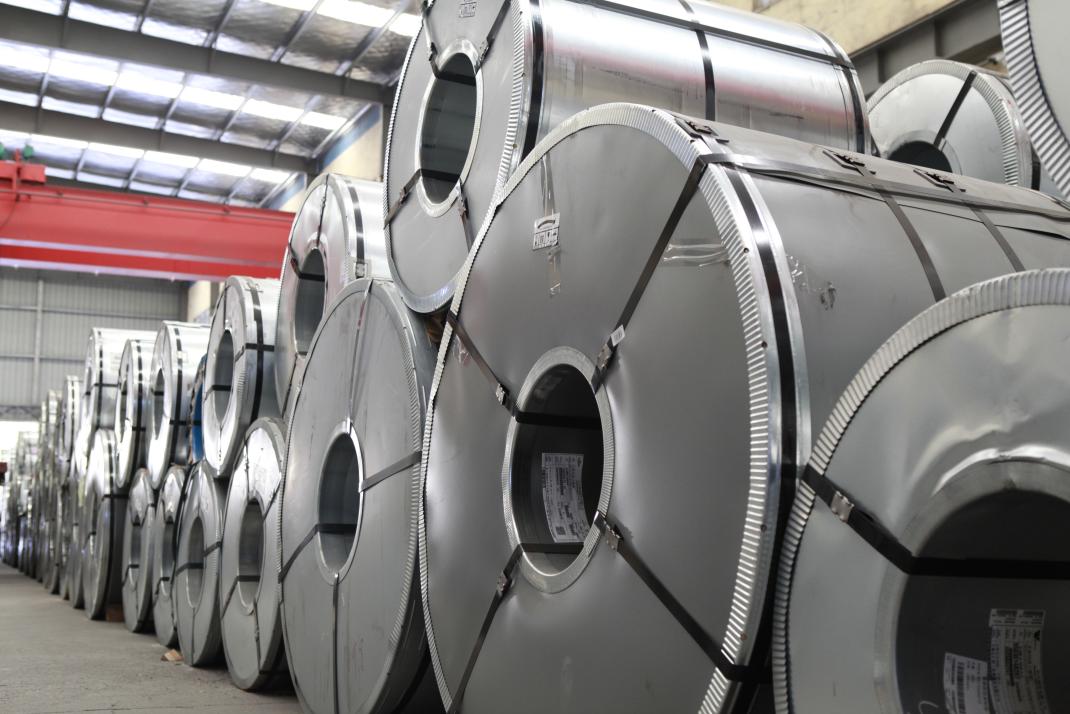
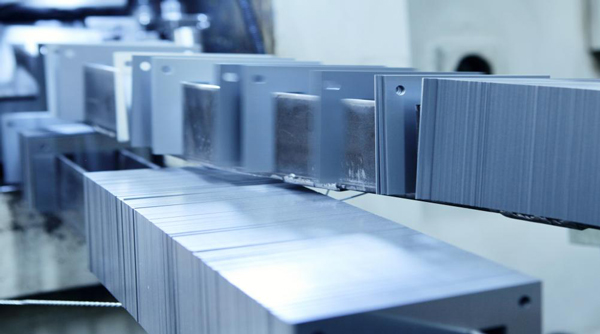
Chinese domestic silicon steel production capacity now covers the entire spectrum from low-end to mid-range and high-end products. The overall quality, including surface quality, dimensional accuracy, and packaging, is comparable to that of similar foreign products. In 2023, China produced approximately 12.0407 million tons of non-oriented silicon steel, an increase of 8% year-on-year; and approximately 2.6502 million tons of oriented silicon steel, an increase of 22% year-on-year. In the first half of 2024, my country produced 6.417 million tons of non-oriented silicon steel, with a capacity utilization rate of 82%, and 27 production enterprises nationwide. By product type, high-grade non-oriented silicon steel production reached 1.973 million tons, accounting for 31% of the total; among which, the production of thin silicon steel (0.20mm and below) saw significant growth.
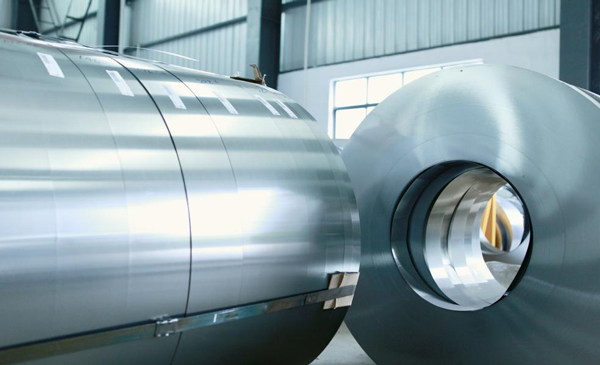
Although Chinese silicon steel industry has developed rapidly, with both the number of enterprises and output increasing, problems have also emerged. Experts indicate that the silicon steel industry currently faces three issues requiring attention. First, the product structure needs adjustment, reducing low-end products and increasing the proportion of high-end products. A moderate overcapacity is beneficial for market competition, promoting the survival of the fittest, and facilitating technological progress. Second, the silicon steel industry needs to upgrade its equipment to be of higher quality and more intelligent. my country’s silicon steel industry is currently updating equipment and building new high-end production lines, and is fully capable of meeting the needs of China’s modern, high-quality development. Equipment upgrades are necessary for high-quality development, and product upgrades are necessary for energy conservation and emission reduction. Third, silicon steel production needs to optimize processes and emphasize environmental protection. Silicon steel production involves long processes and production cycles; therefore, research is needed to develop new processes, technologies, and equipment to make silicon steel greener and more environmentally friendly. Examples include research on acid-free pickling technology, low-temperature HiB (high-temperature silicon steel) without normalization technology, multi-roll continuous rolling mill HiB technology for solving aging rolling problems, and porous media combustion system drying technology.
In the new energy sector, transformer energy efficiency standards have been revised again. In June 2023, the state released a new version of the recommended standard GB/T10228-2023, “Technical Parameters and Requirements for Dry-Type Power Transformers,” which came into effect on December 1, 2023. The existing energy efficiency standard GB20052, “Energy Efficiency Limits and Energy Efficiency Grades for Power Transformers,” was revised, adding content related to new energy transformers, and came into effect on February 1, 2025.
Secondly, the global transformer market outlook is positive, maintaining a growth trend with a year-on-year increase of 7% to 9% in 2023. In terms of supply and demand, global transformer market demand is mainly concentrated in the Asia-Pacific region, with faster growth in demand in Asia-Pacific and North America. The United States, the United Kingdom, and Germany are the main importers, while China, Mexico, South Korea, and Turkey are the main exporters. Regarding the competitive landscape, foreign multinational companies occupy a large market share, accounting for 20% to 30%.
In terms of market size, the global transformer market is expected to grow steadily over the next five years, with the global growth rate expected to be slightly higher than that of China. In terms of technological trends, high efficiency and energy saving, support for new energy integration, intelligentization and digitalization, environmental protection and sustainable development are the development directions. Regarding materials trends, grain-oriented silicon steel is moving towards higher grades (085 and above). According to a report released by the U.S. Department of Energy, the demand for transformers in the U.S. and globally in 2020 was 1,300 and 12,500 units respectively, and is projected to rise to 2,800 and 23,400 units respectively by 2027, indicating huge market growth potential. The U.S. domestic supply is insufficient, its domestic production capacity is limited, its import dependence is high, delivery cycles are long, prices have risen sharply, and there are shortages of materials and labor, suggesting that shortages may persist for a long time.
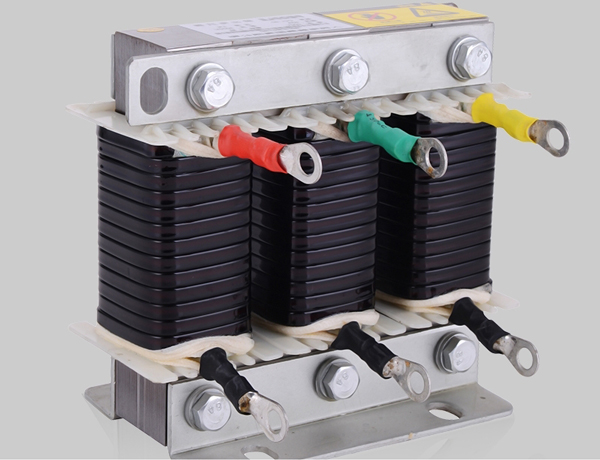
However, going global presents both challenges and opportunities. The fragmented nature of overseas power grids, high certification barriers, and policy restrictions pose challenges to domestic companies. However, domestic products possess advantages in cost-effectiveness and production capacity, and can expand their overseas presence. It’s worth noting that the European power grid initiative also brings business opportunities to the transformer industry. In December 2023, the European Commission announced the “Power Grid Action Plan,” proposing to invest €584 billion in the maintenance, improvement, and upgrading of the European power grid and related facilities. It is projected that by 2030, 40% to 55% of low-voltage lines in the European power grid will be over 50 years old. Opportunities mainly arise in the following five areas:
Firstly, the aging of distribution networks. Most equipment has exceeded 40 years of use, making the upgrading and renovation of power grid facilities in developed countries an urgent need.
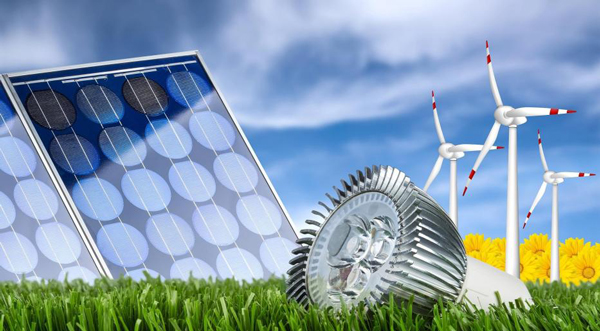
Second, the demand for grid connection of new energy sources is surging. The number of renewable energy sources waiting to be connected to the grid is enormous and constantly growing; in some European countries, the installed capacity of wind and solar power waiting to be connected has reached hundreds of kilowatts.
Third, electricity consumption is increasing. There is a need to meet demands related to clean transportation, heating and cooling, industrial electrification, and the launch of low-carbon hydrogen production. Electricity consumption is projected to increase by about 60% by 2030.
Fourth, the construction and grid connection of charging stations are increasing. In early 2023, the EU passed legislation requiring all new cars registered in Europe to be zero-emission vehicles from 2035 onwards, necessitating large-scale improvements in charging infrastructure.
Fifth, there is a focus on upgrading cross-border power grids. Cross-border transmission infrastructure will double in the next seven years, adding 23 million kilowatts of capacity by the end of 2025 and a further 64 million kilowatts by 2030.