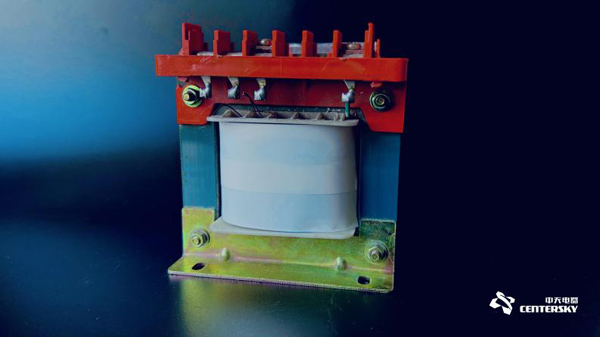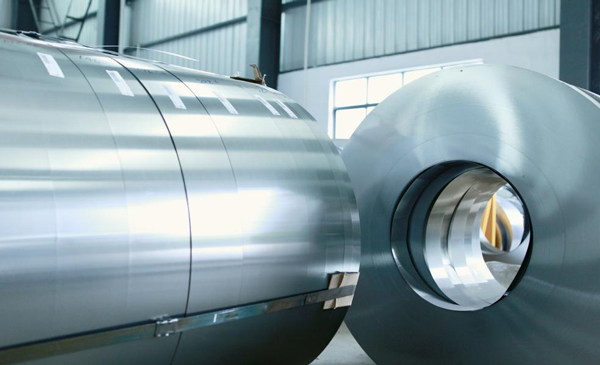
Oriented silicon steel, an indispensable core functional material in the power industry, is an ultra-low carbon ferrosilicon alloy with grains arranged in essentially the same direction. Its high permeability, low coercivity, and high resistivity make it a key raw material for transformer core manufacturing, earning it the reputation of “a work of art among steel products.” In recent years, the accelerated global energy transition, driven by demands for ultra-high voltage power grid construction, new energy power generation, and energy-saving transformer upgrades, has propelled the industry’s rapid development. Through technological breakthroughs, my country has transformed from an import-dependent nation to a major global producer, with its product structure continuously upgrading towards higher magnetic induction and lower losses. Under the dual-carbon strategy, improved energy efficiency standards and the expansion of the new energy industry have become core drivers of industry growth, while the international market’s demand gap for high-end products presents new export opportunities.
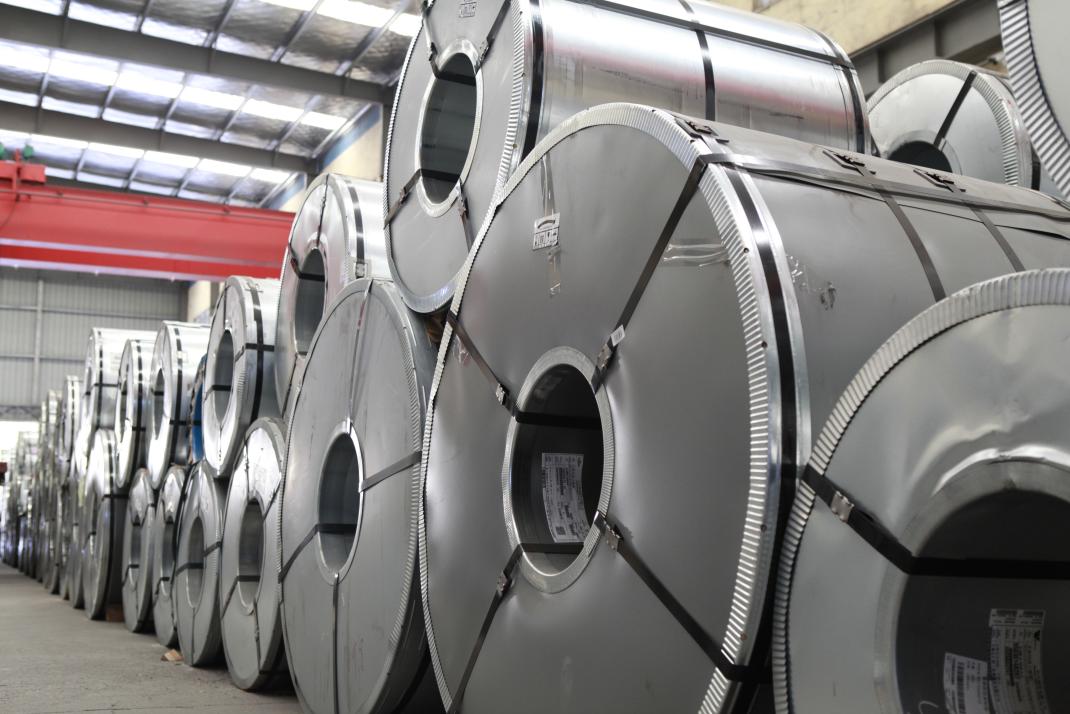
Analysis of the Current Status of the Grain-Oriented Silicon Steel Industry
Domestic enterprises have overcome traditional process limitations through technological innovations such as low-temperature high-magnetic-induction processes and ultra-thin specification manufacturing, significantly boosting the import substitution rate of high-end products. Currently, the industry has formed a pattern of “state-owned enterprises dominating the high-end market, while private enterprises compete through differentiation in the mid-range market,” with products extending from traditional power equipment to fields such as new energy power transmission and smart grids. High-magnetic-induction grain-oriented silicon steel (HiB), with its low iron loss characteristics, continues to expand its application in ultra-high voltage transformers and new energy power plant supporting equipment, becoming a major driver of market growth.
The industry is accelerating the integration of the entire supply chain from smelting and rolling to application. Leading companies are improving cost control and responsiveness by streamlining production from raw materials to end products. Production bases are mainly concentrated in East China, Central China, and North China, forming a regionalized capacity layout around transformer manufacturing clusters, effectively reducing transportation costs and supply chain risks. Long certification cycles and stable partnerships with downstream customers further strengthen industry concentration.
The government, focusing on industrial upgrading and energy conservation and environmental protection, has introduced policies such as raising energy efficiency standards and upgrading aging equipment, forcing the transformer industry to transform towards high efficiency, directly driving demand for high-grade grain-oriented silicon steel. Simultaneously, the Belt and Road Initiative is promoting overseas power grid construction, coupled with supply gaps caused by energy efficiency upgrades in Europe and the United States, creating favorable conditions for the export of domestically produced high-end products.
According to the “2026-2030 China Oriented Silicon Steel Industry Panoramic Survey and Development Trend Forecast Report” by the China Research Institute of Industry:
The industry is currently undergoing a critical transformation from quantitative growth to qualitative improvement. On the one hand, new production capacity continues to be released, market supply and demand are approaching equilibrium, and price competition for low-end products is intensifying. On the other hand, the requirements for material performance in fields such as ultra-high voltage power transmission and new energy are constantly increasing, driving companies to increase R&D investment and break through to ultra-thin specifications below 0.2mm and products with lower iron loss values. Future industry competition will focus on technological innovation and green manufacturing, with companies possessing full-industry chain integration capabilities and high-end product R&D strength occupying a dominant position.
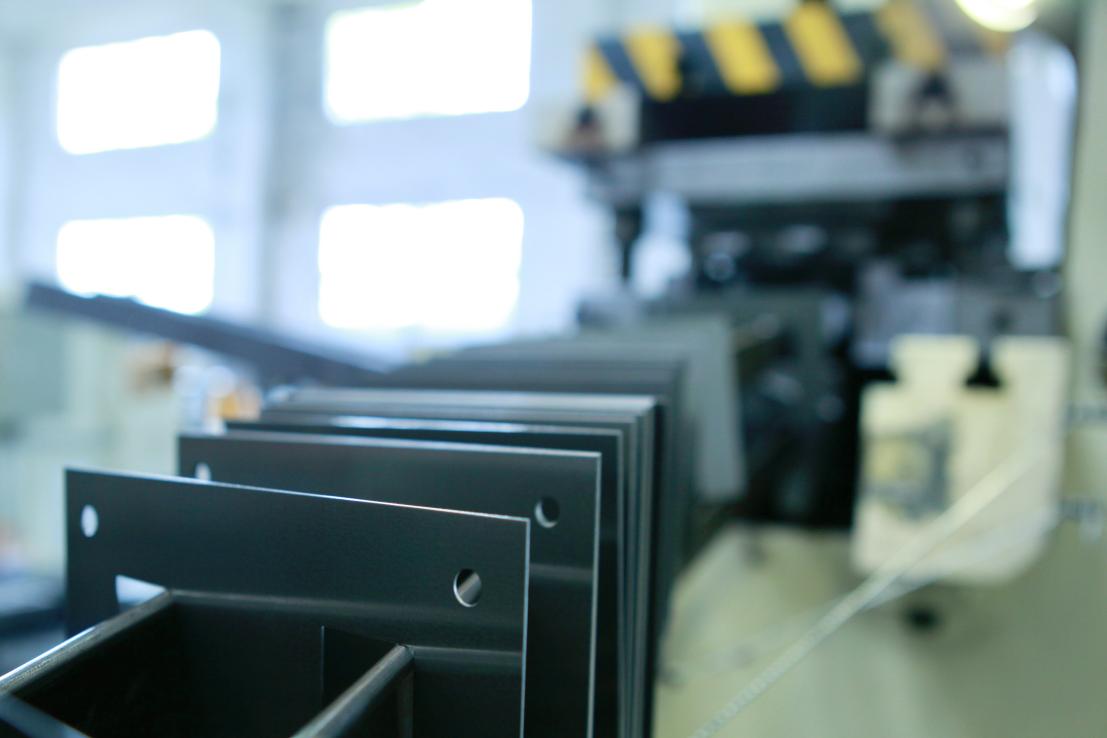
Forecast of Development Trends in the Oriented Silicon Steel Industry
1. Technological iteration accelerates the process of high-end development.
Cutting-edge technologies such as 0.08mm ultra-thin strips and non-gravity silicon steel are gradually being industrialized, and the precision of magnetic domain control and the level of iron loss optimization are approaching international leading levels. New processes such as adding bismuth will further enhance magnetic induction intensity, expand its application in large wind turbines and new energy vehicle drive motors, and break through traditional application boundaries.
2、Deepening Green Manufacturing and Low-Carbon Transition
The industry is responding to the dual-carbon strategy by reducing energy consumption through low-temperature manufacturing processes and promoting the recycling of renewable materials, thereby driving a continuous decline in carbon emission intensity per ton of steel. The widespread adoption of green factory certification and clean production standards will become essential for enterprises to participate in international competition.
3. Diversification and expansion of application scenarios
Beyond the traditional transformer sector, oriented silicon steel is showing its substitution effect in emerging applications such as new energy vehicle motors and rail transit traction converters. With the upgrading of energy efficiency standards for high-efficiency motors, the partial substitution of non-oriented silicon steel by oriented silicon steel will open up incremental market opportunities, creating a “one material, multiple uses” market structure.
4. Reshaping of the international competitive landscape
Domestic enterprises, leveraging cost advantages and technological breakthroughs, have gradually broken the monopoly of Japanese and South Korean companies in the mid-to-high-end market, and their export share has continued to increase. However, issues such as insufficient international standard-setting power and reliance on imported core equipment still need to be addressed. The industry needs to enhance its global competitiveness through joint R&D and standard setting.
With industrial upgrading and energy conservation and environmental protection as its core, the government has introduced policies such as improving energy efficiency standards and upgrading outdated equipment, forcing the transformer industry to transform towards high efficiency, directly boosting demand for high-grade grain-oriented silicon steel. At the same time, the Belt and Road Initiative is promoting overseas power grid construction, coupled with supply gaps caused by energy efficiency upgrades in Europe and the United States, creating favorable conditions for the export of domestically produced high-end products. Under the dual-carbon strategy, improved energy efficiency standards and the expansion of the new energy industry have become the core drivers of industry growth, while the international market’s demand gap for high-end products brings new opportunities for exports.