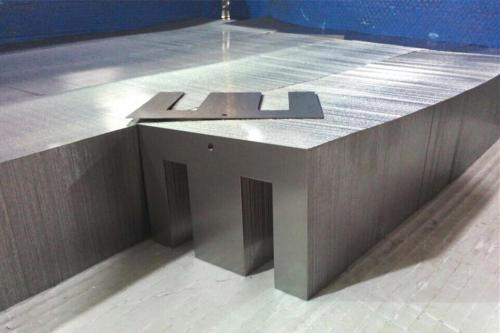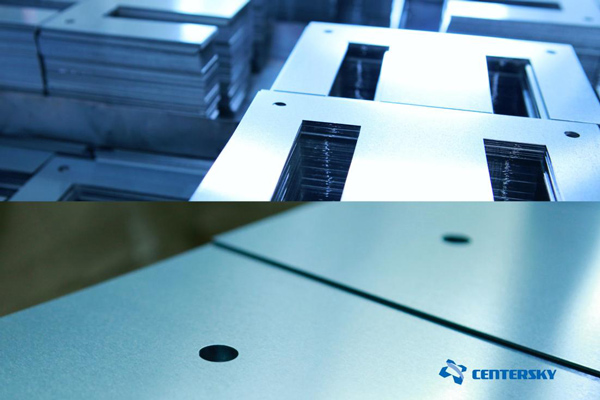
For the iron core of the transformer, a 0.35 mm and 0.5mm thick cold-rolled silicon steel sheet is generally selected. According to the required iron core size, it is cut into rectangle lamination, and then overlapped into a “日” shape or “口” shape, or directly Choose standard EI lamination to overlap into “日” shape. From a logical point of view, if in order to reduce the eddy current, the thinner the thickness of the silicon steel sheet, the narrower the spliced strips. The better the effect. This reduces the eddy current loss, reduces the temperature rise, and saves silicon steel sheet materials. However, when making silicon steel sheet iron cores, it is not only from the above-mentioned favorable factors. Because the iron core is made in that way, it will greatly increase The working hours also reduce the effective cross section of the r core. Therefore, when using silicon steel sheets to make transformer cores, it is necessary to weigh the pros and cons from the specific situation and choose the best size.