The AI race is not merely a battle over chips, but a battle over power—and silicon steel, a seemingly unassuming material, is emerging as the ‘hard currency’ of the global computing race. From AI servers to power transformers, the stable delivery of every kilowatt-hour relies on this sheet of steel thinner than paper, which ultimately defines the ceiling of computing power and the future of energy.
In recent years, discussions across the internet have centered on AI large models, computing power, and data centers. Many assume the AI race is purely a battle over chips, yet a critical underlying chain is often overlooked: AI runs on computing power, computing power depends on electricity, power stability hinges on transformers, and the very heart of a transformer is silicon steel.
It may sound like a roundabout connection, yet it reflects the most fundamental reality of today’s technology and energy landscape. Every time people scroll through short videos, use AI tools, or watch livestreams, electricity is quietly powering it all behind the scenes. Delivering that power stably with minimal loss depends entirely on transformers—and whether a transformer can operate with high energy efficiency and long-term reliability comes down to a razor-thin sheet of silicon steel.
Many dismiss silicon steel as a conventional, unglamorous steel product. Yet this unassuming material has become the “hard currency” of the global computing race. Today, many domestic manufacturers have overseas order backlogs stretching into 2027, high-end products face tight supply at home, supportive policies continue to roll out, and the entire industrial chain is surging. Today, let’s break down this complete chain from AI to silicon steel in plain language—without hype or bias, focusing strictly on real market dynamics and everyday value.
Modern AI has long outgrown simple chatbots. Large model training, 10,000-GPU computing clusters, and hyperscale data centers are all massive power consumers. Official data shows that a single high-end AI server running at full capacity consumes as much electricity in a year as 30 average households combined, while a large-scale computing center uses over 100 million kilowatt-hours annually—on par with a small-to-medium-sized factory.
Every time computing scale doubles, electricity demand doubles right along with it. In the past, people assumed the bottleneck of computing power lay in chip manufacturing processes. Today, industry consensus has shifted: if the power supply falls short or fluctuates, even the most powerful chips cannot run.
Electricity cannot simply be plugged in and used directly. From the power grid to the server room, it must go through multiple stages of voltage transformation, stabilization, and regulation. AI servers are extraordinarily sensitive to voltage fluctuations—even slight instability can cause system crashes or hardware damage. This imposes requirements on transformers far beyond ordinary applications: high power capacity, low loss, rock-solid stability, and 24/7 continuous operation.
This is also why, over the past year, delivery lead times for data-center-specific transformers have stretched from 1–2 months to significantly longer. It is not due to insufficient production capacity, but rather because technical standards have been raised so high that conventional products simply cannot qualify for computing centers.
In a power grid, the role of a transformer is essentially to step voltage up or down and stabilize electrical current. Without it, electricity could never reach millions of households—let alone power high-density computing facilities.

Many assume a transformer is just an ordinary piece of equipment, when in fact its technical barriers are exceptionally high. Over 60% of a transformer’s total cost lies in its core, and the sole core material is grain-oriented silicon steel. The performance of the silicon steel directly dictates a transformer’s energy loss, service life, and operational stability.
Years ago, national authorities introduced mandatory energy efficiency standards to completely phase out outdated, energy-intensive transformers. Newly built power grids, data centers, and renewable energy projects are now required to use Grade 1 energy-efficiency products. This has compelled the entire industry to upgrade—and the key to that upgrade lies in adopting higher-grade silicon steel.
It can be understood this way: AI defines the ceiling of computing power, electricity defines the ceiling of AI, transformers define the ceiling of electricity, and silicon steel defines the ceiling of transformers. Every link is tightly interlocked, and none can function without the others.
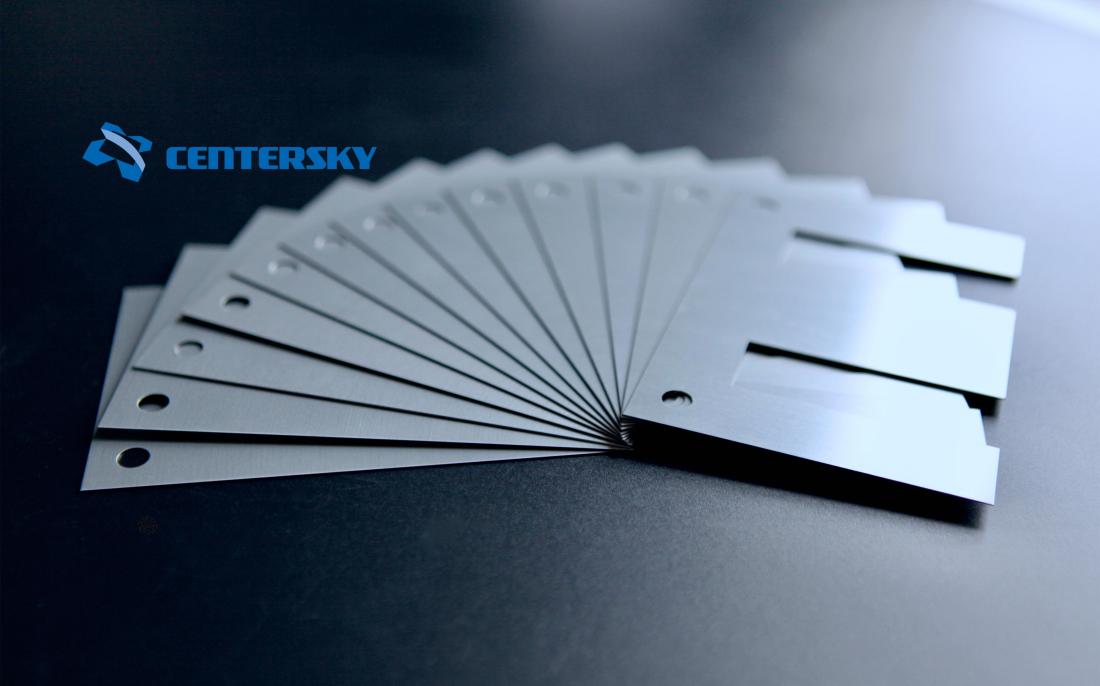
Silicon steel, formally known as electrical steel, is a specialized soft magnetic material with a moderate silicon content. Its primary functions are magnetic flux conduction and minimizing electrical energy loss, earning it the title of the “crown jewel” among steel products. Its defining characteristic is simple: the thinner and purer it is, the lower its core loss—and the greater the technical difficulty to produce it.
Currently, the world’s pinnacle product is 0.18 mm ultra-thin grain-oriented silicon steel—thinner than two sheets of A4 paper. Its manufacturing process is extraordinarily complex: the slightest deviation in temperature, tension, or annealing ruins the entire batch. For decades, this technology was monopolized by foreign producers, and it took Chinese engineers over ten years to achieve independent breakthroughs. Today, China has become the world’s largest producer of silicon steel, accounting for more than half of global high-end grain-oriented silicon steel capacity. Leading enterprises such as Baowu have achieved stable mass production of 0.18 mm ultra-thin silicon steel, reaching world-class performance standards and completely eliminating foreign technological bottlenecks.

Do not underestimate this tiny difference in thickness. When applied to data center transformers, it can save millions in electricity bills annually, dramatically reduce thermal dissipation pressure, and extend equipment service life by more than a decade. In computing scenarios where every kilowatt-hour counts like gold, high-end silicon steel is an absolute necessity.
Today’s silicon steel industry is not driven by short-term hype, but by a genuine convergence of three major demand drivers—each capable of sustaining strong industry momentum for the next 5 to 10 years.
First Driver: The Explosion of AI Computing Power and Data Centers. As global computing center construction accelerates, demand for high-efficiency specialty transformers has surged, directly driving annual growth in high-end silicon steel demand by over 20%.
Second Driver: Massive National Power Grid Investments. During China’s 15th Five-Year Plan period, power grid investments are projected to reach RMB 4 trillion (approx. $560 billion). With ultra-high voltage (UHV) transmission, distribution network upgrades, and renewable energy grid integration rolling out nationwide, transformer demand remains at sustained highs.
Third Driver: Surging Global Overseas Orders. Power grids across Europe and North America are severely aging, while domestic manufacturing capacity falls short—creating a massive transformer shortage with 80% relying on imports. Consequently, China’s exports of transformers and silicon steel have surged year after year, with order backlogs extending into 2027. Combined with mandatory energy efficiency regulations, dual-carbon goals, electric vehicles, and wind and solar power installations, silicon steel has long evolved from a “traditional material” into a national strategic foundational material. With stable demand, high technical barriers, and a consolidated competitive landscape, it represents a genuinely long-term growth track.
A Clear Truth for Everyone: No Matter How Dazzling Technology Gets, It Relies on Basic Industry as Its Foundation. Terms like AI, large models, and computing power sound cutting-edge, yet their physical bedrock consists of power generation, electrical grids, transformers, and silicon steel—industries often perceived as “traditional.” Without a robust power supply and solid material support, the digital economy would be nothing more than a castle in the air.

China’s ability to secure a firm foothold in the global computing race—and to transition from a follower to a global leader in transformers and silicon steel—relies not on fleeting market trends, but on decades of industrial accumulation and relentless technological breakthroughs. This also teaches us a profound lesson: true national competitiveness lies hidden within every unassuming sheet of silicon steel and every steadily operating transformer.
In the years ahead, electricity and computing power will become deeply intertwined, and the value of silicon steel as a core foundational material will grow increasingly prominent. This is not merely an opportunity for a single industry, but an inevitable direction for broader industrial upgrading and the global energy transition.