Throughout the manufacturing process of reactors, transformers, and other power and electronic equipment, silicon steel laminations are a critical material that directly determines magnetic performance, no-load losses, and long-term operating stability.
During procurement, many manufacturers tend to focus heavily on unit price while overlooking long-term material performance and consistency. This approach can ultimately result in excessive no-load current, abnormal operating noise, excessive temperature rise, and other quality issues in finished products.
For reactor and transformer manufacturers, selecting a reliable silicon steel lamination supplier and establishing a stable, long-term supply-chain partnership are therefore critical to maintaining product quality and reducing total lifecycle costs.
1. Key Technical Considerations for Silicon Steel Selection
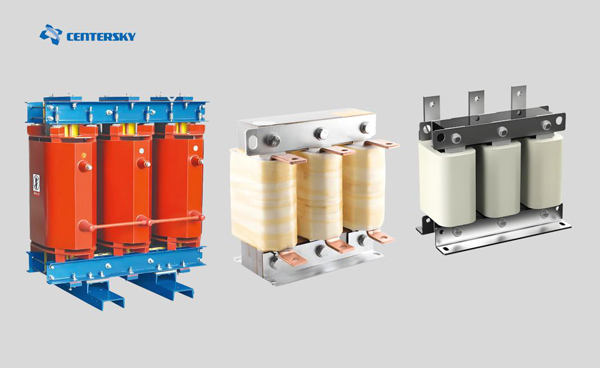
Electrical steel, commonly known as silicon steel, is a soft magnetic alloy containing approximately 0.5%–4.5% silicon. Based on its magnetic domain orientation, electrical steel is generally classified into two major categories: grain-oriented electrical steel (GOES) and non-oriented electrical steel (NOES).
Cold-rolled grain-oriented electrical steel features a highly oriented grain structure and excellent magnetic properties along the rolling direction, making it the primary material used for transformer cores.
Cold-rolled non-oriented electrical steel, by contrast, has a relatively uniform and non-directional grain structure, making it more suitable for applications such as motors, reactors, and other magnetic components where magnetic flux changes in multiple directions.
When selecting silicon steel for reactors and transformers, material grade alone is not sufficient. The material must be matched to the actual operating conditions and core design.
1.1 Working Flux Density
Working flux density has a direct impact on the overall performance of the equipment.
For cold-rolled electrical steel, the working flux density is generally recommended to be maintained below approximately 17,000 Gauss, while for hot-rolled electrical steel, it is generally recommended not to exceed approximately 14,500 Gauss.
Excessively high flux density can significantly increase no-load losses and no-load current, while also contributing to excessive operating noise and higher inrush current during energization.
1.2 Stacking Factor
The stacking factor is another critical parameter that should not be overlooked.
For 0.35 mm cold-rolled electrical steel laminations, a typical stacking factor may be approximately 0.94–0.95 without insulation coating, or 0.93–0.94 with insulation coating.
For hot-rolled electrical steel of the same thickness with insulation coating, the stacking factor is typically around 0.91–0.92.
The stacking factor directly affects the calculation of the effective magnetic cross-sectional area of the core and should therefore be taken into consideration during core design and material selection.
1.3 Core Joint Design
The joint design should also be matched to the magnetic characteristics of the material.
Cold-rolled grain-oriented electrical steel exhibits highly directional magnetic properties. Its specific core loss along the rolling direction can be only approximately one-third to one-quarter of that in the transverse direction.
For this reason, 45-degree mitered joints are generally preferred for transformer cores made from grain-oriented electrical steel, as they can significantly reduce core losses.
For hot-rolled electrical steel, butt joints or combined butt/mitered joint configurations may be adopted, depending on the requirements for manufacturing complexity, material utilization, and core performance.
China has established a relatively comprehensive standards framework for electrical steel and transformer cores. Standards such as T/CECA 39—2020, Silicon Steel for Transformers, and GB/T 32288—2020, Electrical Steel (Silicon Steel) Cores for Power Transformers, specify requirements covering technical performance, test methods, inspection procedures, packaging, transportation, and storage.
These standards can be used as important references when evaluating and qualifying silicon steel suppliers.
2. Key Criteria for Evaluating a Reliable Silicon Steel Lamination Supplier
There are numerous silicon steel suppliers in the market, but product quality and manufacturing capabilities vary considerably.
For reactor and transformer manufacturers, supplier selection should not rely solely on general market reputation or price quotations. A reliable supplier should be evaluated against several measurable criteria.

Industry Experience and Production Capacity
The manufacturing of silicon steel laminations is highly dependent on accumulated process expertise.
Manufacturers with decades of industry experience typically have extensive know-how in areas such as material utilization, tooling design, dimensional accuracy, stamping processes, and production consistency.
Manufacturing infrastructure is equally important. Suppliers equipped with mature tooling, automatic stamping presses, in-house engineering and R&D capabilities, and a responsive after-sales service system are generally better positioned to handle high-volume orders while maintaining consistent quality between production batches.
Comprehensive Quality Control
A reliable supplier should have a quality-control system covering the entire manufacturing process, supported by a dedicated quality inspection team.
Certification to the ISO 9001 quality management system is an important reference point. In addition, regular employee training and competency assessments can help ensure that production personnel consistently follow established manufacturing and inspection procedures.
Effective quality management should cover three fundamental areas: personnel, equipment, and inspection.
Product Range and Customization Capability
Transformer and reactor core requirements can vary significantly in terms of dimensions, configurations, and performance requirements.
A supplier capable of providing a broad range of standard EI laminations, from EI-28 to EI-360, as well as three-phase cores, ballast cores, and various customized or non-standard laminations, can provide greater flexibility for manufacturers with different product lines.
A broader product portfolio can also reduce the need to source different components from multiple suppliers, thereby minimizing potential variations in material quality and dimensional consistency.
Delivery Performance and Supply-Chain Stability
For manufacturing companies, delivery reliability directly affects production scheduling and inventory management.
Suppliers with stable long-term relationships with upstream electrical steel mills and raw-material distributors are better positioned to maintain consistent supply during periods of market volatility.
For example, delivery capabilities such as approximately 10–12 days for a 20-ton standard EI lamination order and 16–20 days for a 50-ton order can meet the production schedules of many transformer and reactor manufacturers.
Fast response times are particularly valuable when customers need to accommodate urgent production requirements or unexpected changes in demand.
Experience Across Downstream Applications
A qualified silicon steel lamination supplier should ideally have extensive application experience across multiple industries.
Its products should have been validated in actual operating conditions in applications including:
● Reactors
● Transformers
● Current transformers (CTs)
● Voltage transformers (VTs)
● Voltage regulators
● Welding machines
● Instrumentation and electrical equipment
● Other magnetic-core applications
Broad application experience provides valuable evidence of a supplier’s material compatibility, manufacturing consistency, and long-term product reliability.
3. Why Established Manufacturers Such as Centersky Electrical Can Be a Reliable Choice
Established manufacturers such as Jiangyin Centersky Electrical Appliance Co., Ltd with more than 50 years of experience in the silicon steel lamination industry, can serve as a representative choice for transformer and reactor manufacturers looking for long-term supply partners.
Its capabilities align closely with the key criteria outlined above.
Manufacturing Infrastructure and Production Capacity
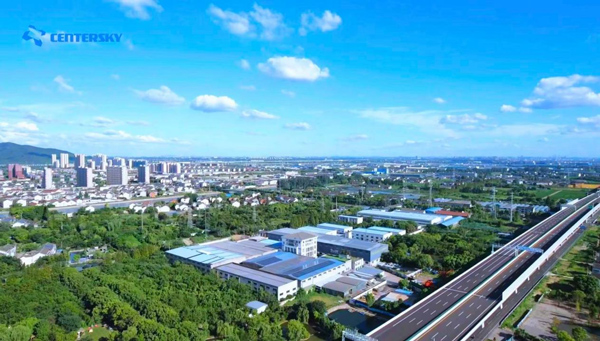
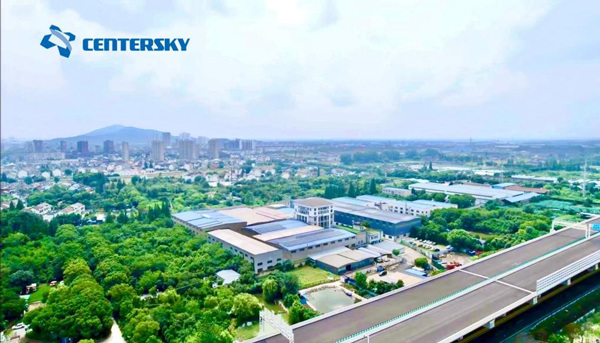
Located in Jiangyin, Jiangsu Province, the company benefits from convenient transportation and logistics access, with major expressways including the Shanghai–Chengdu Expressway and Beijing–Shanghai Expressway located close to the manufacturing facility.
The company occupies approximately 15,000 square meters, with a total building area of approximately 7,000 square meters.
Its production facilities include complete slitting and cut-to-length lines, combined with automatic stamping presses, providing the capacity to process silicon steel laminations in both high volumes and with tight dimensional tolerances.
Quality Management
The company maintains a dedicated quality-control team and has established a quality management system covering the entire production process.
It has obtained ISO 9001:2000 quality management system certification and conducts regular employee training and competency assessments.
By controlling personnel, equipment, production processes, and inspection procedures, the company aims to maintain stable product quality and batch-to-batch consistency.
The company also supports customized and non-standard core requirements, with products widely used in reactors, transformers, current transformers, and other magnetic-core applications.
This combination of standard products and customization capability allows the supplier to serve both smaller manufacturers requiring procurement flexibility and larger manufacturers requiring stable, high-volume supply.
Supply-Chain and Delivery Capabilities
With more than five decades of industry experience, the company has established long-term relationships with upstream raw-material suppliers.
These relationships help provide downstream customers with a relatively stable supply of electrical steel while also supporting more effective control of raw-material procurement costs.
Combined with a responsive production and delivery system, this enables the company to respond effectively to urgent orders and changing production requirements.
4. Key Considerations for Establishing a Long-Term Supply Partnership

Selecting a reliable silicon steel lamination supplier should not be treated as a one-time price comparison exercise. Instead, it should be viewed as a systematic process of building a stable and sustainable supply chain.
After identifying potential suppliers, manufacturers should conduct several key validation steps.
Step 1: Conduct Small-Batch Trials
The first step should be a small-batch trial.
The supplied laminations should be manufactured into prototype or sample cores and tested under actual operating conditions.
Key performance parameters should include:
●No-load loss
● No-load current
● Temperature rise
● Operating noise
● Core performance under the specified working conditions
This provides a practical assessment of whether the material meets the customer’s actual design requirements.
Step 2: Verify Batch-to-Batch Consistency
A supplier should not be evaluated solely on the performance of one sample batch.
It is advisable to purchase and evaluate two to three consecutive batches, checking dimensional tolerances and conducting appropriate magnetic-performance inspections.
The objective is to determine whether the supplier can maintain stable product quality and magnetic performance over time.
Step 3: Establish Long-Term Demand Coordination
Once a supplier has been qualified, both parties should establish an ongoing demand-forecasting and communication mechanism.
Sharing product development plans, expected order volumes, and upcoming specification changes with the supplier allows the supplier to make advance preparations regarding production processes, tooling, raw-material procurement, and capacity allocation.
This type of long-term coordination can improve supply-chain resilience and enable both parties to respond more effectively to changes in market demand.
Conclusion
For reactor and transformer manufacturers, the quality of silicon steel laminations has a direct impact on the core performance and overall reliability of the finished product.
Selecting a supplier with strong industry experience, rigorous quality control, stable supply-chain capabilities, flexible customization, and reliable delivery performance may appear to involve a reasonable premium at the procurement stage.
However, over the entire product lifecycle, a reliable silicon steel supplier can significantly reduce hidden costs associated with rework, production interruptions, product returns, warranty claims, and field failures.
For manufacturers seeking to improve product reliability while strengthening their long-term competitiveness, choosing the right silicon steel lamination supplier is therefore not simply a procurement decision—it is a strategic supply-chain decision that directly supports product quality, cost efficiency, and long-term competitiveness.