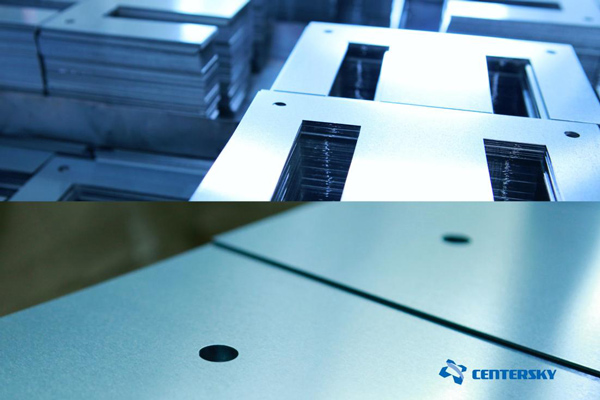
Although both transformer and reactor cores are made of laminated silicon steel sheets, their material selection differs significantly. This is mainly due to their different functions in power systems, leading to different performance requirements for the core materials.
Core Reasons for Material Differences
One: Functional Requirements Determine Material Characteristics:
1. Transformer: Its core function is to efficiently transmit electrical energy, requiring a strong magnetic field within the core to achieve voltage transformation. Therefore, high-permeability silicon steel sheets are preferred for transformer cores to minimize magnetic resistance and maximize energy transfer efficiency.
2. Reactor: Its main function is to suppress voltage and current fluctuations in the power system (such as current limiting and filtering), not energy transfer. It only needs to generate a relatively weak magnetic field within the core. Therefore, reactor cores prioritize low magnetic loss characteristics to reduce heat generated by hysteresis and eddy current effects under alternating magnetic fields, ensuring stable equipment operation.
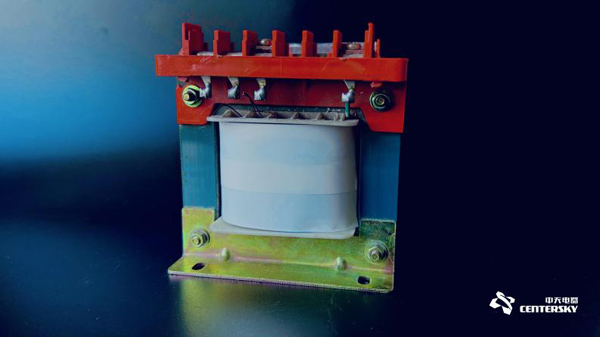
II. Selection of Silicon Steel Sheet Type:
1. Transformer Core: Typically uses grain-oriented silicon steel sheets (also known as cold-rolled grain-oriented silicon steel sheets). This material has a highly uniform grain orientation, resulting in extremely high permeability and extremely low unit iron loss in the rolling direction, making it an ideal material for manufacturing high-efficiency transformer cores.
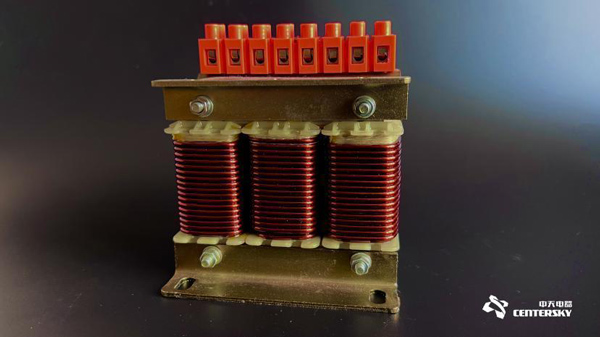
2. Reactor Core: Mostly uses non-oriented silicon steel sheets (or cold-rolled non-oriented silicon steel sheets). Although its permeability is lower than that of grain-oriented silicon steel sheets, its magnetic properties are more uniform in all directions, and it has better loss characteristics at low flux densities, making it more suitable for reactor operation. Some reactors also use grain-oriented silicon steel sheets to achieve smaller size and lower heat generation, but this is more expensive.
In short, transformer cores prioritize “high permeability” for efficient energy transfer, hence the selection of grain-oriented silicon steel sheets; reactor cores prioritize “low loss” for stable wave suppression, hence the preference for non-oriented silicon steel sheets. This difference in material composition is determined by their different working principles and design goals.